Wedding Centerpiece Guide: What Actually Works for Your Tables
Centerpieces are, logically, the floral element that affects the most people at your wedding — they're on every table, in everyone's peripheral vision throughout the entire reception, and they show up in a lot of candid photos. They're also the decision that trips up more couples than almost anything else in the floral planning process.
Low or tall? Full arrangements or bud vases? All-green or bloom-forward? The same at every table or varied? Here's the honest guide to what actually works.
Low vs. Tall: The Actual Difference
The low-vs-tall question is mostly a conversation question. Low centerpieces sit below eye level (typically under 12 inches), which means the people sitting across from each other can see each other over the arrangements. Conversation flows more naturally. The room feels more intimate, more dinner-party-like.
Tall centerpieces — arrangements elevated on pedestals or using tall vessels — clear people's eyelines rather than blocking them. They also read dramatically in a large space, creating vertical interest that fills the room visually in a way low arrangements can't. From across a venue, a room full of tall centerpieces looks more dressed.
The practical guidance: For round tables with 8–10 guests, low centerpieces almost always work better for the experience of actually sitting at the table. For long banquet tables where the arrangement runs down the center, lower-profile pieces with varied heights work beautifully. For very large rooms or high-ceilinged venues where the space needs to feel filled, tall arrangements justify themselves.
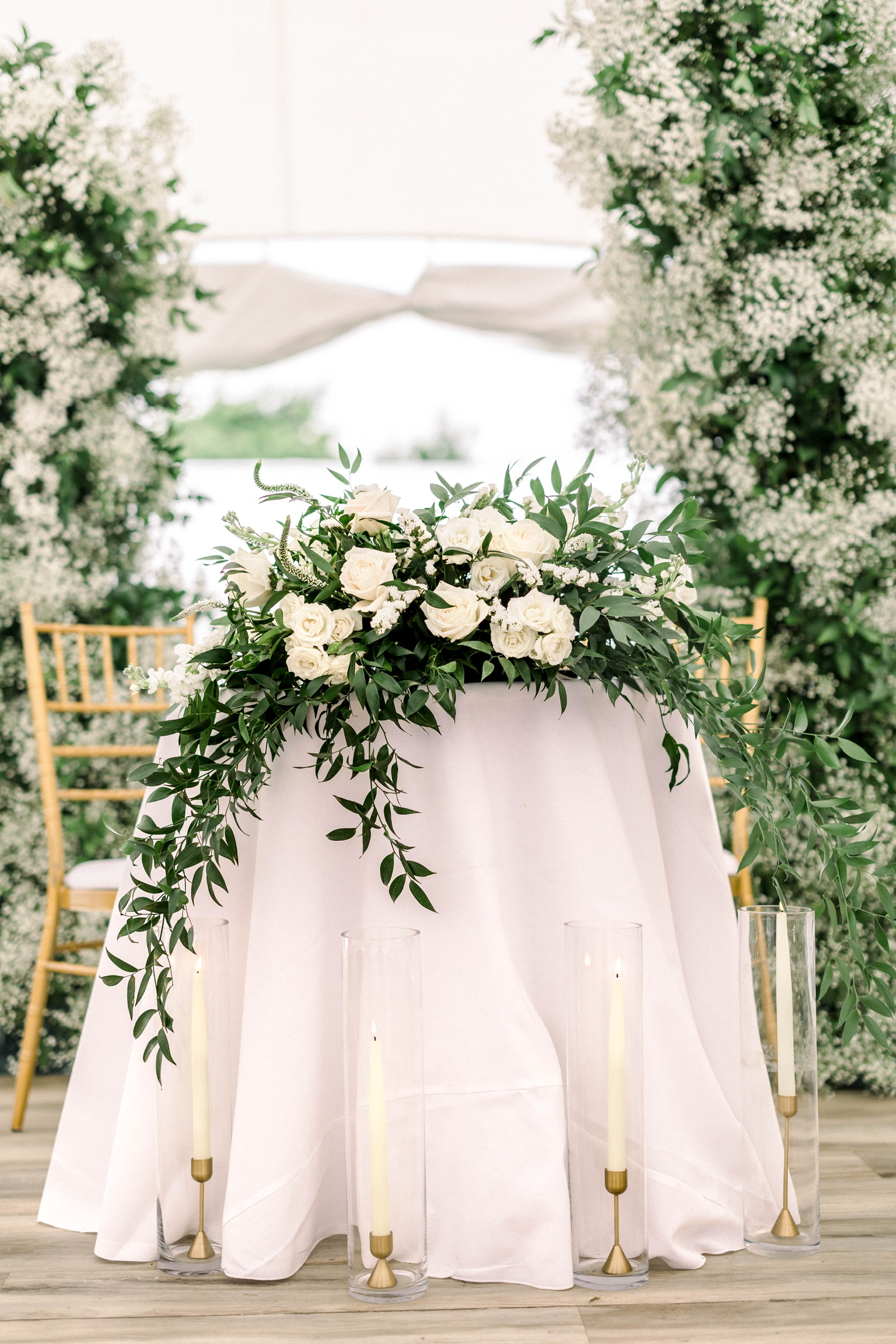
Many couples combine both — tall arrangements at a few anchor tables (the sweetheart table, the head table, key locations in the room) and lower arrangements at the rest. It creates visual interest without making every conversation a navigation exercise.
Bud Vases: When They Work and When They Don't
The cluster of bud vases has been one of the dominant centerpiece trends for several years now. And at their best — curated, layered, varied in height, with genuinely interesting flowers — they're beautiful and intimate.
At their worst, they look like someone raided a craft store, and they read as an attempt to save money by spreading out a smaller flower budget across many small containers.
Bud vases work when:
- They're genuinely curated, not just "a bunch of single stems in glass tubes"
- The variety of vessels creates actual visual interest (different heights, shapes, textures)
- They're designed as a cohesive composition, not just scattered
- The flowers in them are high quality and well-selected
Bud vases don't work as well when:
- The venue is large and the tables are far from each other (they read as sparse from a distance)
- The event is more formal (the aesthetic tends to be too casual for black-tie or estate settings)
- Budget is the primary driver and it shows in the execution
If bud vases are your direction, the difference between beautiful and underwhelming is almost entirely in the design and curation — not in the number of vases.
Bloom-Forward vs. Greenery-Forward
There was a long stretch where every centerpiece was a lush, leafy thing with flowers as accents. That aesthetic hasn't gone away — greenery-forward design is still beautiful and appropriate in many settings — but it's no longer the only option.
Bloom-forward arrangements — where the flowers are the dominant element and greenery plays a supporting role — have made a strong comeback. They're richer-looking, more classically floral, and often more visually striking in photos.
The choice between the two is largely aesthetic and budget-driven. Greenery is less expensive than blooms, so a heavier foliage mix can help a floral budget stretch further while maintaining visual volume. Bloom-forward costs more but delivers a different effect.
There's no wrong answer, but know what you're choosing and why.
Repurposing Ceremony Pieces at the Reception
One of the most underutilized strategies in floral planning: moving ceremony arrangements to the reception during cocktail hour. Two statement pieces that flanked your ceremony arch can live beautifully at the sweetheart table, the bar, or the escort card table for the rest of the evening.
This requires coordination — someone needs to move them, they need to be in vessels that travel safely, and the timeline needs to allow for it. But it effectively doubles the visual impact of pieces you've already paid for.
When we build out a proposal, we always flag which ceremony elements can realistically be repurposed and what that transition looks like logistically. It's one of the places where good planning directly reduces cost without reducing impact.
What NOT to Do
A few things that consistently underperform:
Overstuffed centerpieces — more flowers doesn't always mean better. Arrangements that are crammed with too many elements at too many scales read as chaotic rather than luxurious.
Wrong scale for the table — a tiny arrangement on a long banquet table, or a massive arrangement on a small cocktail table, is immediately visually jarring. Scale relative to the table is more important than scale in absolute terms.
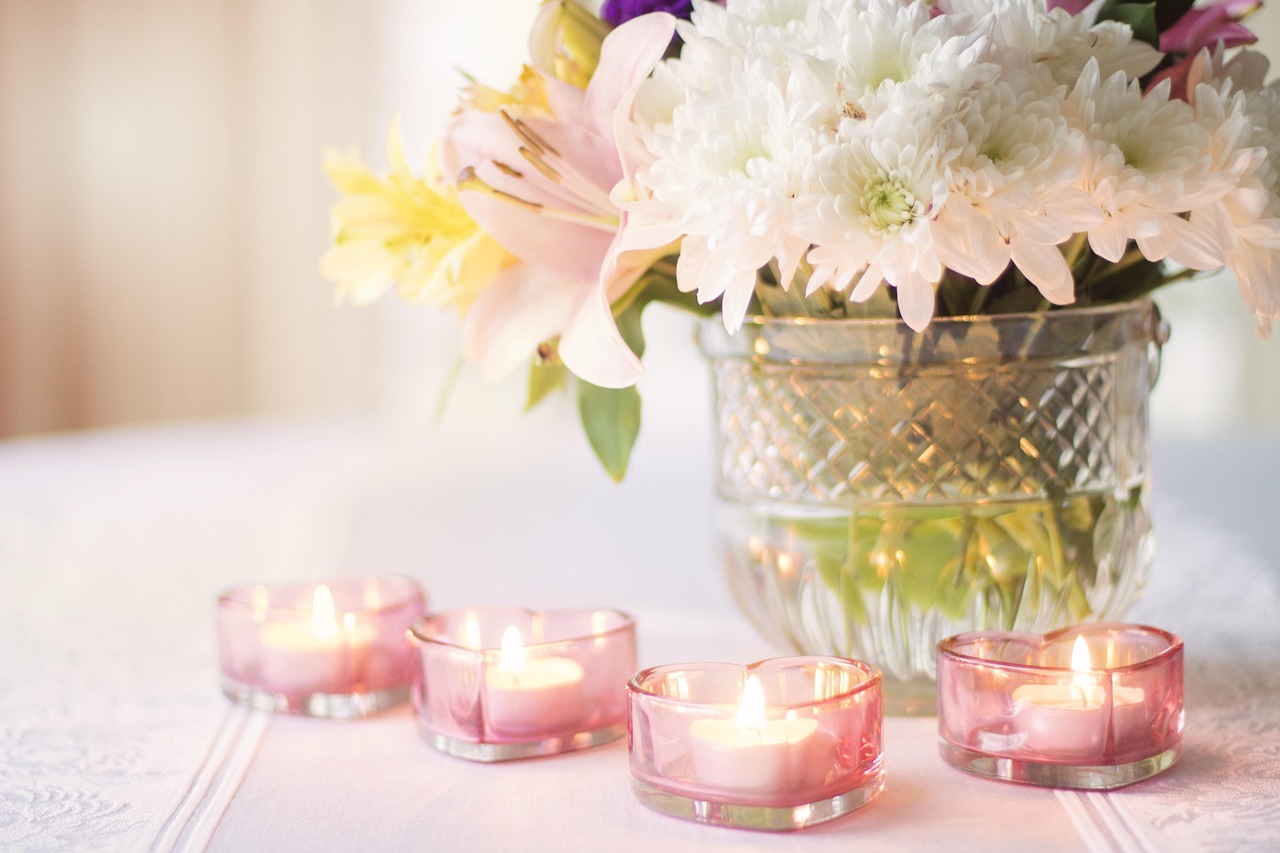
Candles that aren't accounted for — candles do enormous work at a reception and they're often added as an afterthought rather than designed as part of the composition. If you want candles (and you probably should), plan them alongside your centerpieces rather than around them.
Ignoring the tablecloth — a dark floral arrangement on a dark linen disappears. A pale, muted centerpiece on a white tablecloth can look washed out. The table covering is part of the palette.
Talk to us about your reception design → | See our reception work →
If you are still shaping the bigger picture, read up on matching your flowers to your venue and how to plan your wedding flowers from scratch.
Written by Kristina, founder of Evergreen Events — designing wedding florals across Western Massachusetts and Connecticut.