Wedding Flowers for 30–50 Guests: Where to Focus
Thirty guests around one long table can need a very different floral plan from fifty guests at six round tables. That's why “it's a small wedding” is useful context, but not enough information for a flower quote.
For an intimate wedding, the best starting point is where people will spend their time. The bouquet, the ceremony setting, and the dinner table still matter. You simply have a chance to be more deliberate about each one.
For a wedding of 30–50 guests, prioritize the pieces you'll carry, the place you'll exchange vows, and the tables where guests will sit. Decide on the room layout before estimating centerpieces, and treat any decorative extras as choices rather than requirements.
A small guest list doesn't make every floral task smaller
A bridal bouquet takes design time whether there are twenty guests or two hundred. So does sourcing flowers, preparing them, loading a vehicle, and setting up at a venue. A ceremony installation may require the same structure and labor regardless of how many chairs face it.
Fewer dinner tables can mean fewer centerpieces. It doesn't mean every part of a floral proposal shrinks in proportion to the guest count. That's worth understanding before dividing a large wedding budget by four.
If your celebration is at a private home, the logistics may need extra attention rather than less. Your florist will need to know about access, water, work space, and what else is being set up at the same time. Small and straightforward are not always the same thing.
Decide which flowers belong in the photographs you care about
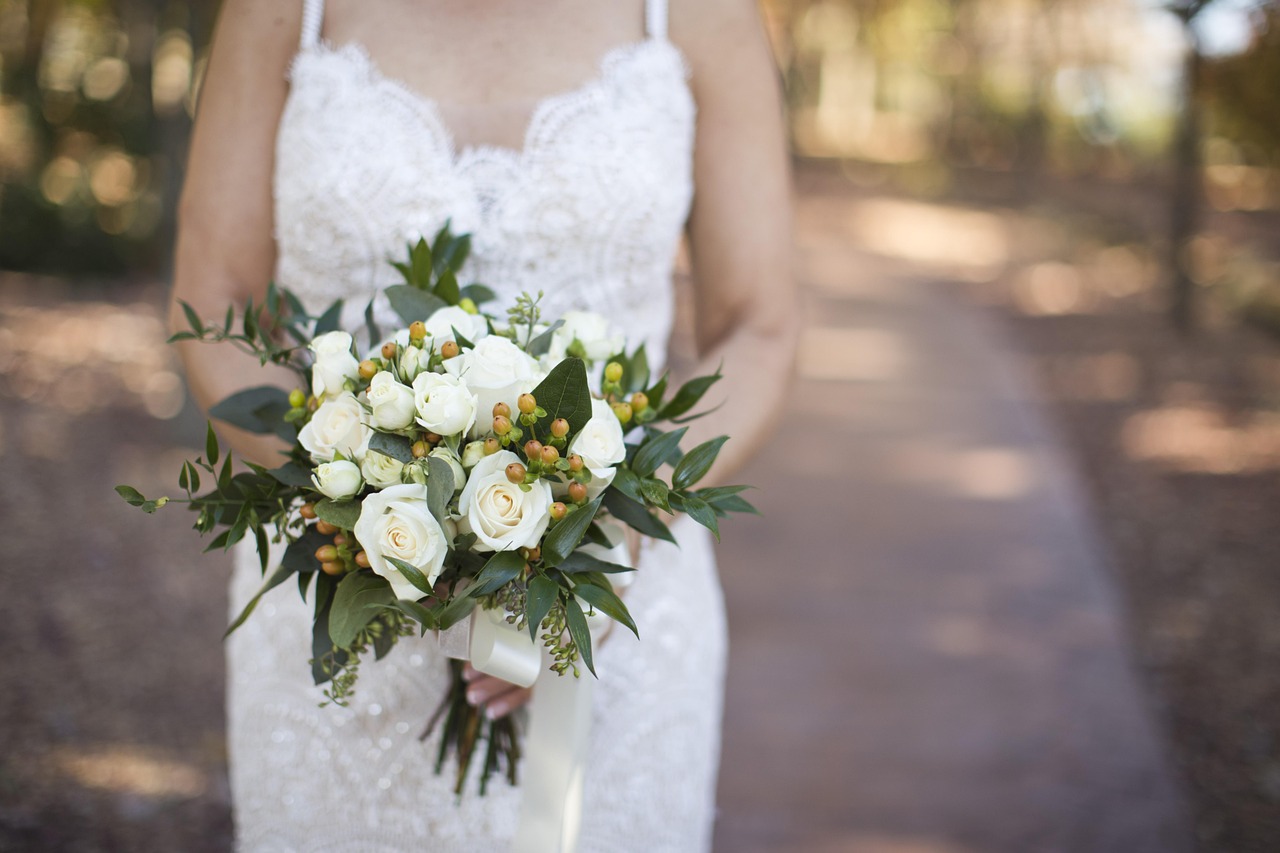
Start with personal flowers: your bouquet, any partner's boutonniere, wedding party flowers, and flowers for family members if you want them. There isn't a compulsory list. A small wedding might have no wedding party at all, or several people standing beside you.
Next, think about the ceremony photographs. If you're marrying in a garden with an attractive backdrop, a modest pair of arrangements may be enough for the feeling you want. If the room is visually plain, you might prefer to make the ceremony flowers the main feature.
Don't order a large installation simply because it appears in most inspiration images. Ask whether that scale makes sense for the space and the number of people gathered there.
Count tables, not guests
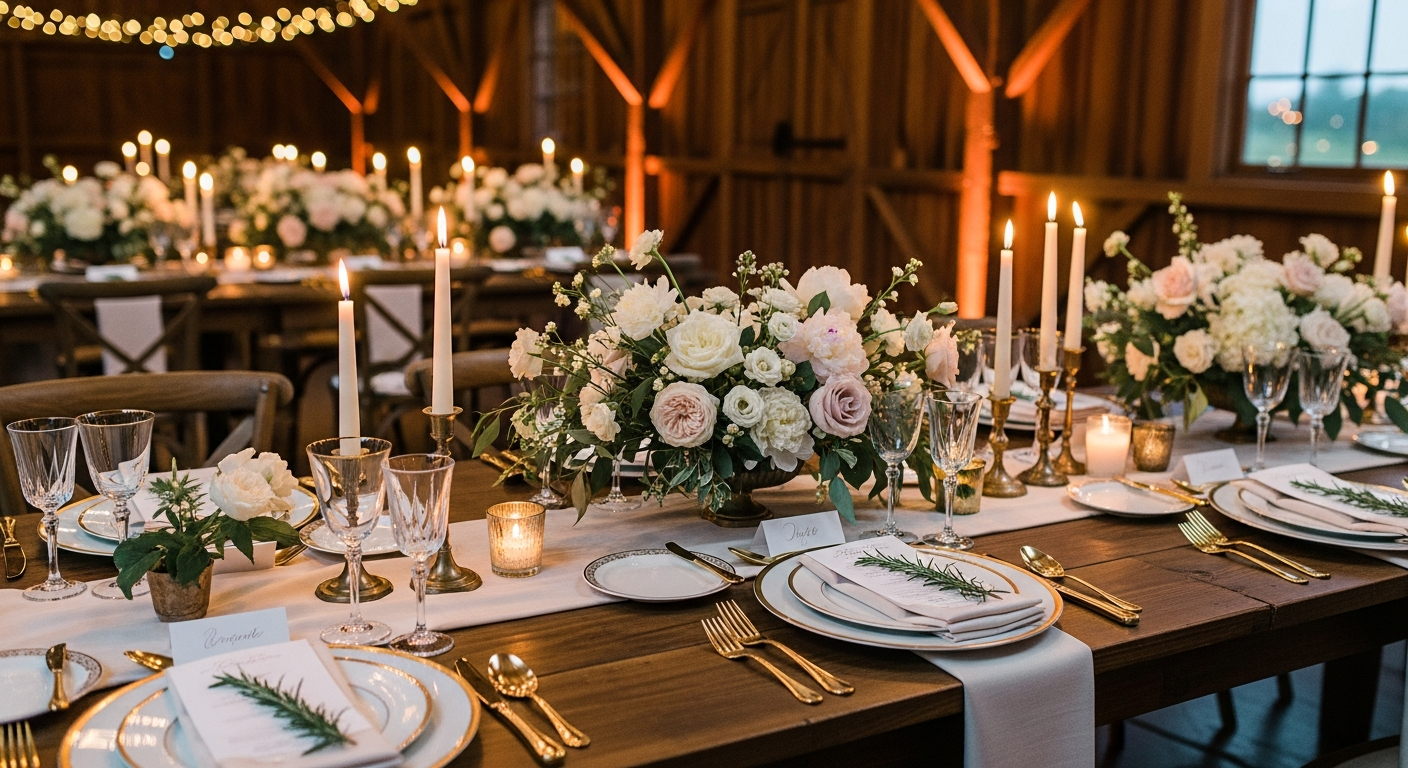
Your florist needs the table count, dimensions, and seating arrangement. They also need to know whether dinner is plated or served with shared dishes, and whether the tables will hold candles, menus, favors, or other decorations.
One or two long tables
Small arrangements repeated down the table can create continuity without a solid runner of flowers. A few larger focal pieces with space between them can work too. The right spacing depends on the table's length and what needs to fit around the flowers.
A continuous garland is not automatically a budget option. Materials, preparation, installation, and the total footage all count. If you love that look, ask for it to be quoted rather than assuming it costs less than arrangements.
Several round tables
Give each table a considered focal point, whether that's one arrangement or a grouped design. Repetition often looks intentional in a small room. You don't have to give every table a different concept to make the dinner feel personal.
For example, forty guests seated at five tables of eight would need a plan for five guest-table settings, plus any separate couple's table. That is a layout example, not a recommended seating plan or a floral package.
Let the venue remove things from your list
An intimate restaurant reception may already have interesting lighting, close-set tables, and a strong interior style. A broad centerpiece could be more obstruction than decoration. A small arrangement chosen for the room may do more.
A New England inn, a garden, and a private dining room each bring different starting points. Ask what the venue already provides and what you are allowed to add. Confirm candle policies, setup access, and cleanup responsibilities rather than relying on photographs of somebody else's event.
Existing decoration isn't always decoration you can move. Check with the venue before planning around borrowed vases, furniture, or arrangements from another space.
Use a short priority list to protect the budget
Try sorting the proposal into three groups:
- Keep: the pieces that define the day for you, such as the bouquet and dinner flowers.
- Adjust: pieces whose size, flower mix, or placement could change without losing the idea.
- Optional: decorative extras you would enjoy but don't need, such as flowers for a welcome sign or a second lounge area.
That gives your florist a way to make useful recommendations. “Spend less everywhere” doesn't communicate which part you would be disappointed to lose.
Reusing ceremony arrangements can be worth discussing, but only with a realistic transfer plan. Our guide to moving ceremony flowers to the reception explains where that works and where the labor changes the calculation.
What to bring to the first conversation
Your date, venue, approximate guest count, and likely table layout are a good start. Add a few images and explain what you like about them. A photograph might be useful for its colors even if the wedding in it is ten times the size of yours.
If the floor plan isn't settled, say so. It's better to discuss two possible layouts than build a quote on a table count nobody has confirmed. The same applies to ceremony plans and family flowers.
For couples in Western Massachusetts and Connecticut, Evergreen's wedding floral service starts with those practical details and your ideas. A smaller celebration deserves a complete design conversation, not a reduced version of someone else's wedding.
Tell us about your intimate wedding. Include what you've decided, what is still open, and which flowers you're most looking forward to.