Can You Reuse Ceremony Flowers at Your Reception?
The ceremony lasts half an hour. The reception lasts all evening. It makes sense to ask whether the flowers at your vows can come to dinner, too.
Many ceremony arrangements can be reused at the reception, provided they're designed for the move and someone has the time, access, and responsibility to move them. The mistake is treating that last part as something to figure out on the day.
Before removing reception flowers from a proposal, draw a line from each ceremony piece to its next location. If you can't name the destination, the mover, and the available time, the plan isn't quite finished.
Start with the pieces that are easiest to move
Freestanding arrangements in stable containers are often better candidates than flowers built directly onto a structure. A pair of ceremony arrangements might frame a sweetheart table or sit beside a reception entrance. Low aisle arrangements might suit a lounge area or the front of a head table.
“Might” is doing some work here. The arrangement needs to fit the new location physically and visually. Something designed to be seen from the front may show its mechanics from behind. A low arrangement intended for the floor may block conversation when lifted onto a dinner table.
Give your florist both locations before the design is finalized. Then the arrangement can be built with the second use in mind instead of being forced into a space it was never meant for.
An arch is not automatically a collection of centerpieces
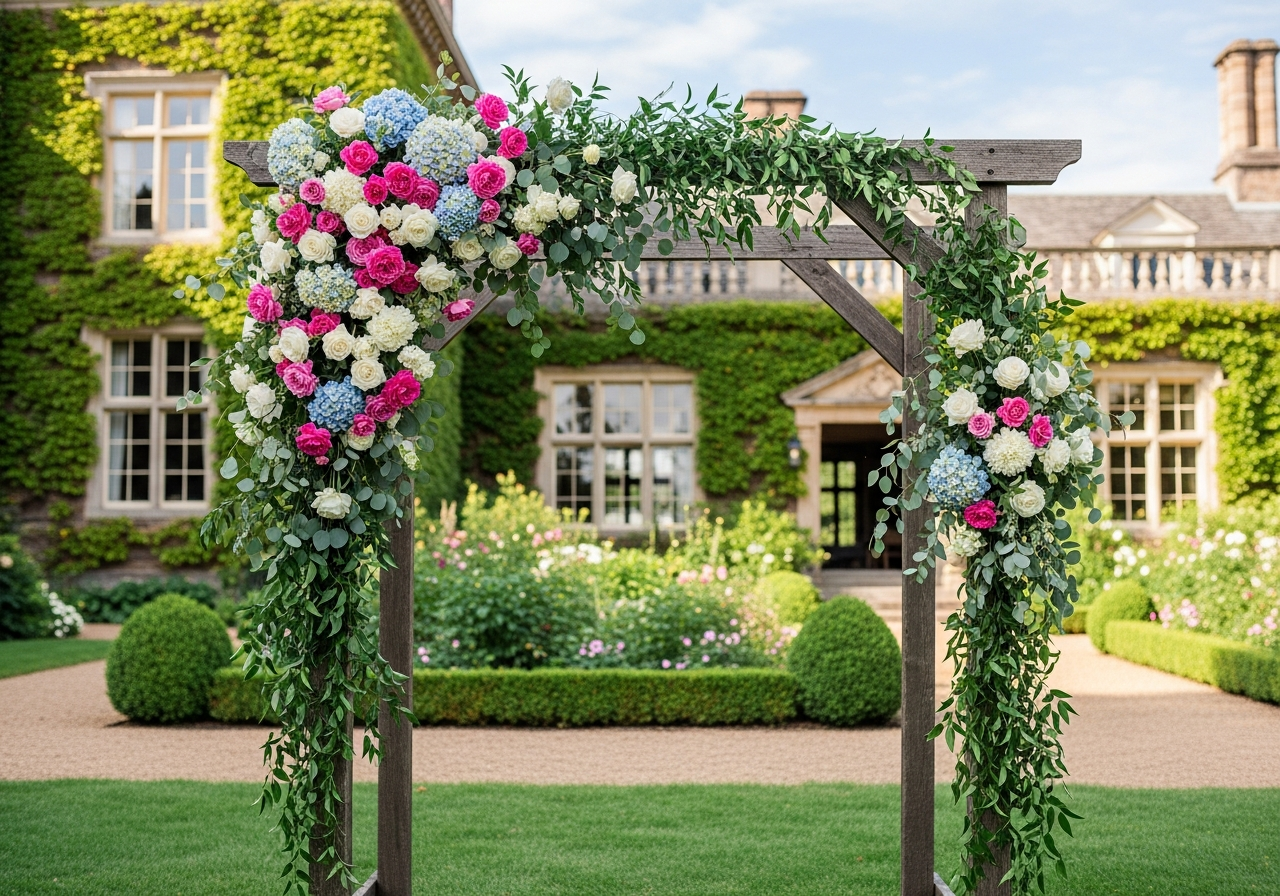
Flowers attached to an arch, arbor, or hanging structure can be more complicated. They may be secured in sections, connected to a water source, or arranged to hide supports. Taking them down can mean dismantling rather than simply carrying.
Some installations can be designed with removable components. Others should stay where they are. Ask which applies to your proposal and whether moving the pieces requires additional design work or equipment.
A plan that sounds economical on paper can become expensive if it requires a team to disassemble and rebuild an installation during cocktail hour. It can still be worth doing. Just compare the full cost, not only the number of stems.
The schedule decides whether the move is realistic
Consider a ceremony outside a Massachusetts barn with dinner in the same building. The physical distance may be short, but the flowers might need to cross the path guests are using for drinks. The photographer may also need the ceremony setting for family pictures after guests leave.
Now consider a church ceremony followed by a reception at another venue in Connecticut. The move adds loading, vehicle space, travel, unloading, and coordination with two venues. A short drive is not the same as a quick transfer.
These are planning examples, not descriptions of particular weddings. The point is that the room layout and timeline matter more than a general promise to “repurpose everything.”
- When are the ceremony flowers free to leave?
- When must the reception room be ready for photographs?
- Can the transfer happen without moving through guests?
- Are doors, stairs, gravel paths, or elevators involved?
- Who has permission to enter and set up in the reception space?
Give every arrangement a named destination
“Put them somewhere at the reception” creates decisions for people who are already busy. Use a simple transfer list instead.
For example: the two ceremony entrance arrangements go beside the sweetheart table; the four movable aisle pieces go in front of the head table; the bouquet has a prepared vase away from candles. Have your florist confirm that each destination suits the size and construction.
Include a backup location if weather changes the ceremony setup. If the ceremony takes place inside the reception room, some pieces may not need to move at all. Others may conflict with the room reset.
A venue floor plan with labels is more useful here than another inspiration photograph.
Does reusing flowers actually save money?
It can reduce the need for additional arrangements. It doesn't necessarily eliminate the cost of labor, transport, vessels, or a team staying on-site between events.
Ask for the transfer work to be identified in your proposal. Then compare two complete plans: one that reuses flowers and includes the move, and one that leaves the ceremony design in place and provides separate reception arrangements.
Sometimes the simplest design is the better value. Sometimes the transfer makes excellent sense, particularly when a large arrangement has a natural second home. Your florist can help distinguish between the two.
Should family or friends handle the move?
Don't assume they can. A substantial arrangement may be heavy, contain water, or need to stay upright in a specific way. Moving rented vessels can also raise questions about responsibility for damage.
If a small piece can safely be moved by someone outside the floral team, agree on that in advance and get clear handling instructions. That person should know where to go and when—not receive the job during the ceremony recessional.
For a wider look at the reception side of the plan, read our wedding centerpiece guide. And if you want the overall celebration timeline coordinated as well as the flowers designed, those are separate scopes to discuss.
Send us your ceremony and reception plans. We can talk through which flowers could serve both spaces and what it would take to move them well.