Can You Have Dahlias at an October Wedding in New England?
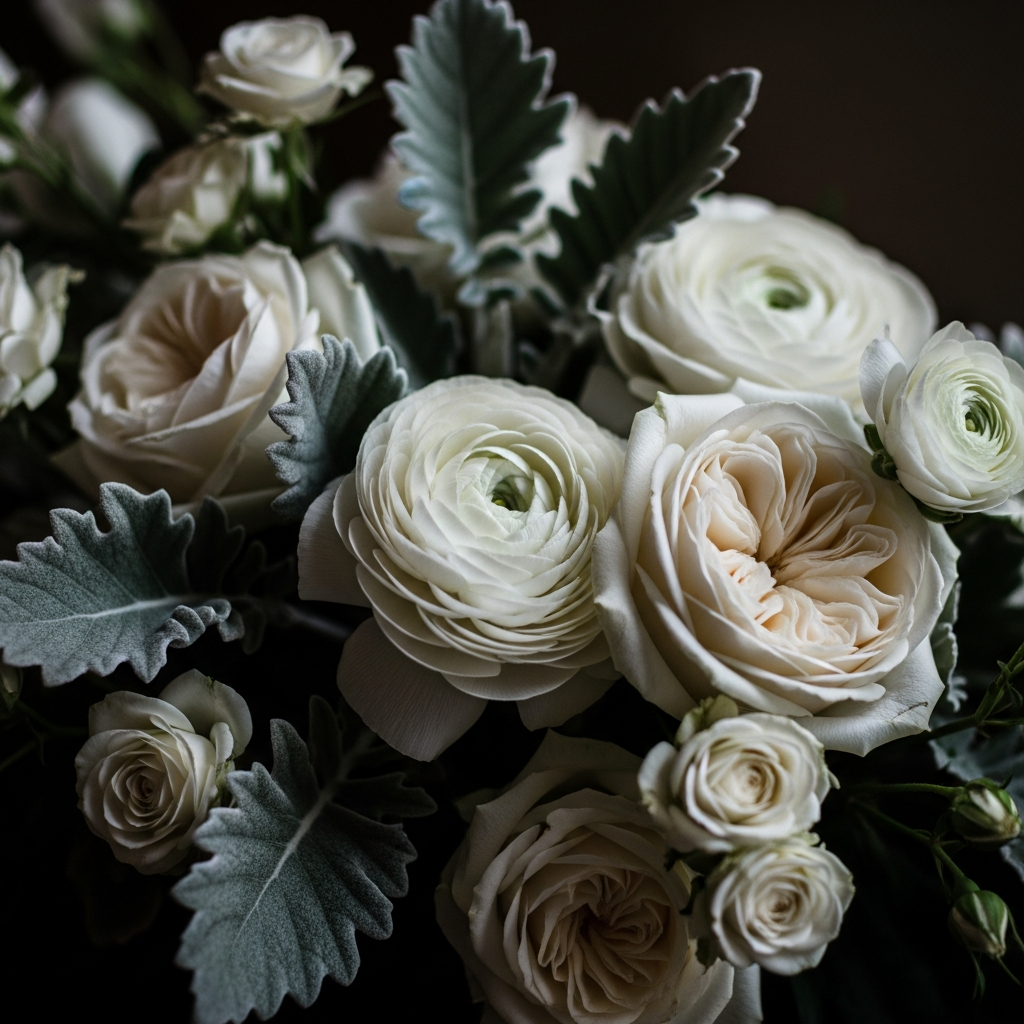
A photograph of a huge, pale dahlia can settle your bouquet plans in about three seconds. Then you notice your wedding is in late October, in the Berkshires, and the caption says the flowers were grown locally.
Can you have the same thing? Possibly. Can a florist promise that a particular local dahlia will be available for that date? That's a different question.
Dahlias can be a beautiful choice for an October wedding in New England, but local availability depends on frost, the grower, and the specific variety. The useful plan is to choose what you love about the flower and agree on how to preserve that feeling if the harvest changes.
October is not one predictable growing season
A sheltered growing site in Connecticut and an exposed field in the hilltowns can have different conditions on the same night. Early October and the last weekend of the month also aren't interchangeable. Even within one town, elevation and exposure matter.
Dahlias are frost-sensitive plants. Utah State University Extension describes their field-grown cut-flower season as ending with the first frost; that biological limit matters here too, even though Utah's calendar isn't a New England availability guide. A date on the calendar cannot tell you what a particular farm will have ready.
This doesn't mean every October dahlia disappears after one cold night across the region. Some growers use protection, and florists may have access to flowers from other growing areas. It means that “in season” is not the same as “guaranteed from a nearby farm.”
Separate the flower from the qualities you actually want
Look at your favorite bouquet image again. Is it the dinner-plate size? The creamy color? The soft, layered petals? Or the way one flower sits a little higher than the rest?
Those details give your florist something more useful than a flower name alone. A bouquet built around a pale, rounded focal flower has room to adapt. A bouquet that must contain a particular named variety at a particular size has much less room.
For example, an ivory-and-caramel palette with loose foliage might still feel right with garden-style roses and other available focal flowers. That is a design alternative, not an identical substitute. Ask to see the difference before you approve it.
Three sensible ways to plan your bouquet
- Dahlias if available: make them a preferred flower, with an agreed palette and replacement approach. This leaves the most flexibility.
- A few focal dahlias: use them as accents rather than making every bouquet and centerpiece depend on a large quantity of one variety.
- A dahlia-led design with alternate sourcing: ask whether nonlocal sourcing is possible, what it changes about the quote, and what happens if quality isn't acceptable.
None of these choices is automatically the cheapest. Stem costs, availability, quantities, and the work of sourcing all matter. Local flowers can be special without being a discount product.
Give the ceremony its own weather plan
Availability is only half the issue. Once flowers arrive, an outdoor ceremony still exposes them to the day's conditions. A bouquet carried outside briefly for pictures is not in the same situation as an arrangement installed hours before guests arrive.
Tell your florist when outdoor photographs start, how long the ceremony flowers need to remain in place, and whether the venue has a sheltered indoor holding area. If the ceremony moves inside, decide where those arrangements can go. That conversation is easier before installation day than while chairs are being moved.
There isn't a universal safe outdoor time for every arrangement. Temperature, wind, sun, the flower mix, and the construction all change the answer. Let the person preparing your flowers make that call for the actual design.
What to ask at your consultation
Bring your date and venue, along with two or three images that show what you like. Then ask:
- Are the dahlias in this proposal local, from another region, or still to be sourced?
- Are we choosing a specific variety or a color and general shape?
- What would you use instead if those flowers aren't available or arrive in poor condition?
- Would alternate sourcing change the price, and would you ask before making that change?
- When will the flower choices be confirmed?
A clear substitution agreement isn't pessimistic. It gives your florist permission to protect the overall design instead of using a disappointing flower just because its name was on a list.
What if dahlias are the one thing you don't want to compromise on?
Say that early. If your date is already booked, your florist can explain the sourcing options and their limits. If you're still choosing a date, talk to a local grower or florist before assuming a particular weekend will be reliable. An earlier date can change the odds, but no outdoor crop comes with certainty.
For a wider view of textures and color combinations, our guide to fall wedding flowers in New England is a useful companion. The goal isn't to talk you out of dahlias. It's to make sure your wedding flowers still feel like yours if October has other plans.
Tell us your wedding date and the flowers you're hoping for. Evergreen Events works with couples in Western Massachusetts and Connecticut, with a personal consultation to sort out preferences, availability, and the details worth planning ahead.
Flower-season reference: Utah State University Extension, Dahlia Cut Flower Production. Local harvest dates must be checked with the grower.